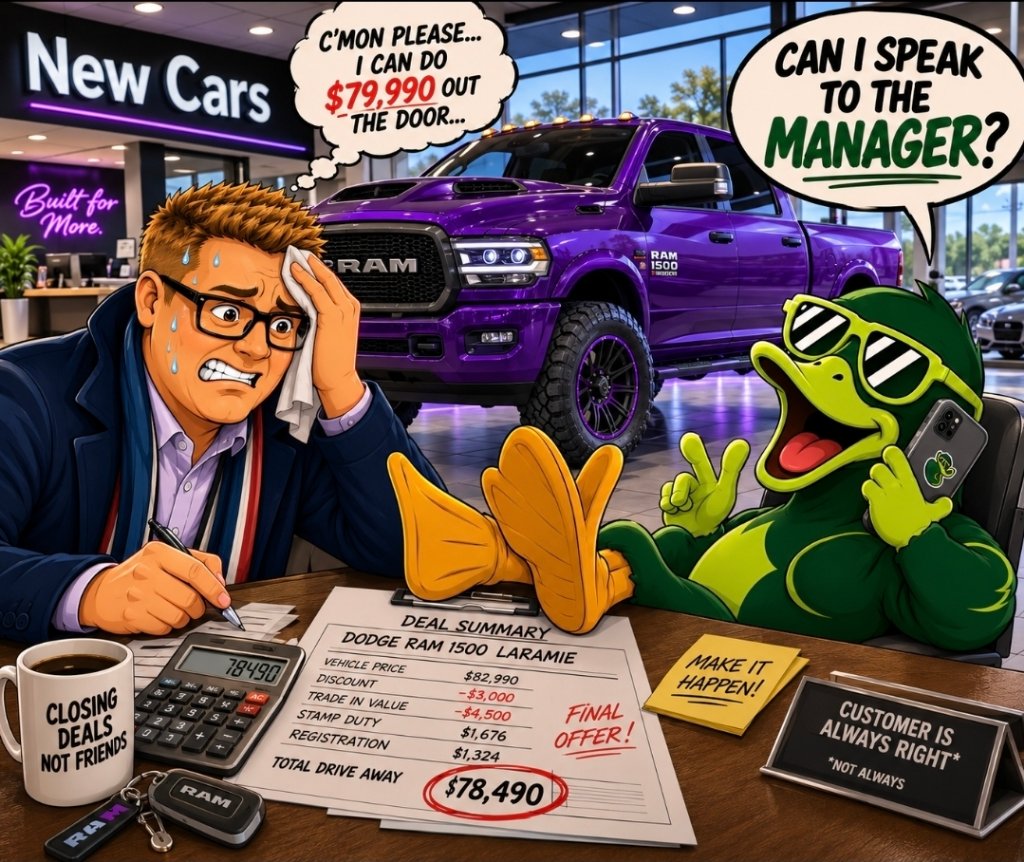
3 Things I've Learnt About the Car Industry, Working in the Car Industry
Before Not a Wood Duck, I sold cars. Here's three things I learnt on the other side of the desk that still shape how I think about car deals.
Before I was an electrician, before Not a Wood Duck was even an idea, I sold cars. And I mean actually sold them, on the floor, in the trenches, having the exact conversations you've probably had (or dreaded having) with a salesperson.
I didn't leave that industry angry at it. I left it knowing how it actually works, which is a very different thing to how people assume it works. So here's three things that stuck with me, the kind of stuff you don't learn until you're standing on the other side of the desk.
1. Your trade in is worth more than you think
Most people walk into a dealership already bracing for a lowball. They've googled a number, they've braced themselves to argue, and half the time they end up accepting whatever's offered because they're exhausted from the back and forth on the new car already.
Here's the thing though. A huge chunk of trade in value gets left on the table before the conversation even starts. People forget to mention the service history sitting in a folder in the glovebox. They don't think to point out the near new tyres or the recent brake job. They assume a few stone chips or a bit of interior wear tanks the value more than it actually does.
An online valuation tool gives you a starting point, not a final answer. Condition, extras, service records and even how the car presents on the day all move the number. Walk in knowing your car properly and you'd be surprised how much room there actually is.
I'll be honest, from personal experience I couldn't tell you how many times I went back to the sales manager for an extra couple grand on a trade because the customer simply asked. More times than I can count. Not because I was being generous, but because there was almost always more room sitting there the whole time, just waiting for someone to actually ask for it.
That's exactly why I built the trade in side of the tools on the site the way I did. Get an honest read on where your car should land before you're standing in front of someone whose job is to lowball you first and negotiate up from there.
2. Sometimes, believe it or not, the dealership isn't lying about selling at a loss
I know how that sounds. Every salesperson has said the line "mate I'm losing money on this one" at some point, and most of the time it's said with a straight face and zero truth behind it. But every now and then, it's actually true, and there's a reason for it that has nothing to do with being generous.
Dealerships work off volume targets set by the manufacturer, not just profit per car. Hit a certain number of sales in a month and the dealership gets a bonus from the manufacturer that can dwarf the margin on any single car. So sometimes moving a car at a loss, or bare minimum profit, still makes sense if it gets them over the line for that bonus. Same goes for aged stock. A car that's been sitting on the lot for months is costing the dealership money in floor plan interest every single day, so getting rid of it for next to nothing can still be the smarter play for them.
And genuinely speaking, sometimes it really is as simple as the car just needs to go. The longer a dealership holds onto a car, the more everyone from the sales manager down starts sweating over it. It's sitting there costing them money every day it doesn't move, and it starts becoming a problem car in meetings. At that point the goal shifts from making a healthy margin to just getting it off the books, and that's when you can genuinely land a great deal without either side lying to the other.
None of this means you should believe every sob story you're told. It means the story is sometimes true, and knowing why helps you pick when to actually push and when the number in front of you is already a good one. If you want a straight answer instead of guessing which one it is, that's exactly what the Fair Deal Checker on the site is built for, run the numbers before you sign anything and know whether you're actually getting a good deal or just being told one.
3. You can think about it, if it sells there will always be another car
This is the one I wish I could go back and tell every customer I ever dealt with. The pressure to decide today, right now, before you walk out the door, is one of the oldest tricks in the book. "Someone's coming to look at it this arvo." "This price is only good if we write it up today." "My manager's only holding this deal until five."
Sometimes it's true. Most of the time it's a tactic to stop you sleeping on it, comparing it elsewhere, or realising the deal isn't actually that good once you've had a night to think it over.
Here's the bit that actually matters. If that exact car sells to someone else while you're thinking it over, there will be another one. Maybe not that specific car with that specific colour, but there is always another car. There is never only one deal in the entire market. Walking away from pressure doesn't cost you the car you deserve, it just means you didn't get talked into the wrong one.
Working in the industry didn't make me cynical about it, it just showed me where the real decisions get made and why. That's the whole idea behind Not a Wood Duck. Not to tell you dealers are all crooks, because plenty aren't, but to give you the same read on the situation that the person across the desk already has.
General information only. This article is for educational purposes and does not constitute financial advice. Consider your personal circumstances and speak with a licensed financial adviser before making loan decisions.