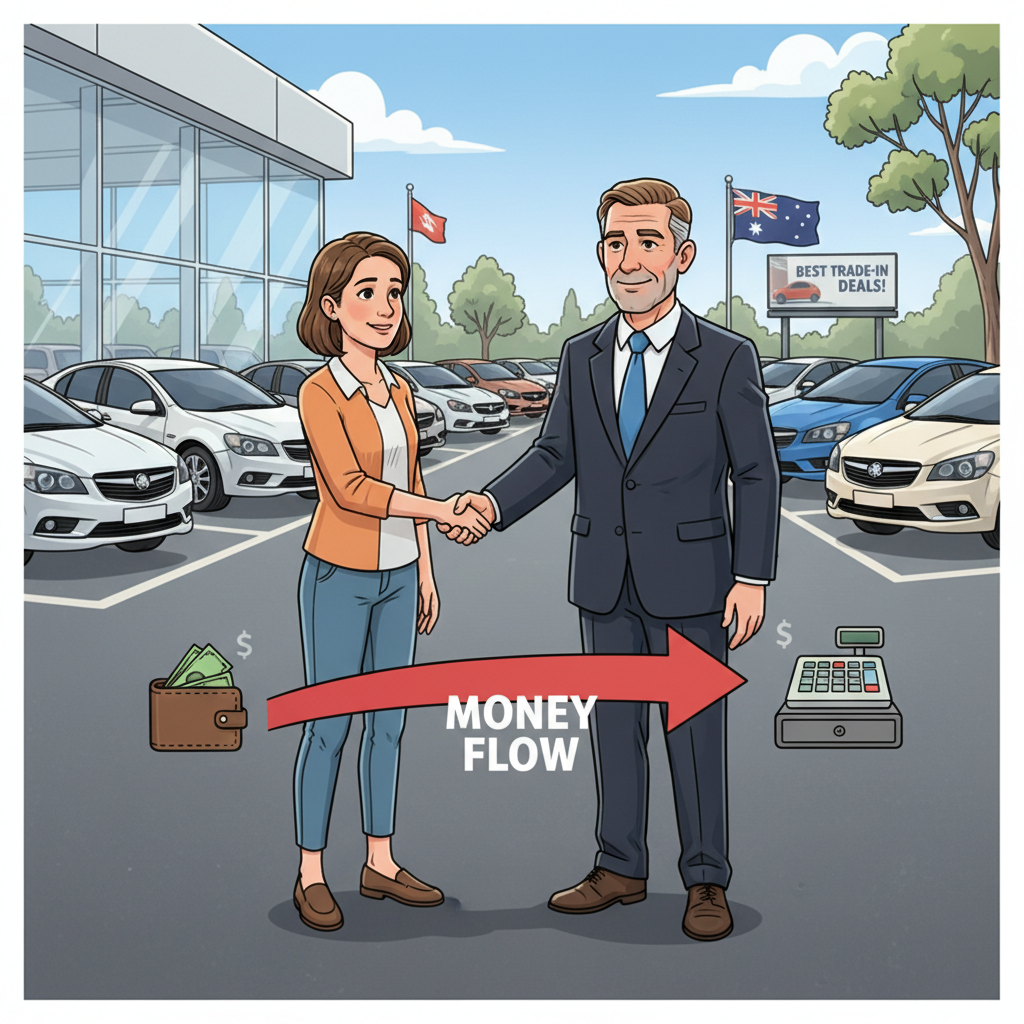
10 Car Dealership Tricks in Australia — And How Not to Get Cooked
Spot the 10 most common car dealership tricks in Australia, from bait pricing to inflated add-ons. Learn what to ask, what to ignore, and when to walk away.
Buying a car should be exciting. You find something you like, take it for a spin, and picture it sitting in the driveway. Then the conversation turns to paperwork and suddenly there are three prices, four fees, a "special" finance rate, and a salesperson who has to check with the manager about absolutely everything. Not every dealership is dodgy, and not every salesperson is out to fleece you. But car buying is a competitive business, and some tactics are designed to make you focus on the wrong number or rush into a decision. Knowing the common tricks means you can stay calm, ask better questions, and keep control of the deal. Here are 10 dealership tactics worth spotting in Australia — plus the simple response for each one.
1. The bait price that mysteriously changes
You see a car advertised for an unbelievably sharp price. When you call or arrive, that exact car is "just sold", unavailable, or missing a few things that apparently cost thousands. The salesperson then points you towards a more expensive vehicle that is "basically the same".
This is the classic bait-and-switch setup. Sometimes the original vehicle genuinely sold quickly. The problem is when the cheap price is used mainly to get you through the door.
Before travelling, ask for the advertised vehicle's stock number, VIN, total drive-away price, and written confirmation that it is still available. If the answer gets slippery, save yourself the trip.
2. "On-road costs" presented like they're all mandatory
Registration, stamp duty and compulsory charges are real costs. But a quote can also contain dealer delivery, administration, protection packages, paint treatments, and other extras bundled under a vague heading such as "on-road costs".
Some of these may be legitimate charges. Others are simply dealer fees or optional products dressed up to sound unavoidable. If the quote only gives you one big number, you can't tell the difference.
Ask for an itemised drive-away quote. Ask which items are government charges, which are dealer charges, and which are optional. You're allowed to question every line.
3. Negotiating on the weekly repayment instead of the car price
"We can get that down to just $149 a week" sounds much nicer than "the total amount payable is $38,740". That's exactly why repayment-focused negotiations are so common.
A lower weekly figure can be created by stretching the loan term, adding a balloon payment, increasing the interest paid, or quietly rolling fees into the finance. You may feel like you've won while paying more overall.
Negotiate the total drive-away price first. Then compare the amount borrowed, interest rate, comparison rate, loan term, fees, total amount payable, and any balloon. The weekly repayment is the last number to discuss, not the first.
4. The finance desk that appears after you've agreed on the car
Once you've emotionally committed to the vehicle, you're moved into the finance office. This is where the deal can grow extra limbs: a higher rate than expected, a broker fee, a warranty, gap cover, paint protection, or an insurance product you didn't ask for.
Dealer finance can be convenient, but convenience isn't the same as value. The dealer or finance broker may receive commission for arranging a loan, which gives them a reason to recommend finance that suits their margin.
Get your own quote or pre-approval before you shop. Ask whether the dealer receives commission and request the full loan comparison. You can say, "I'm comparing the total amount payable, not just the rate."
5. The trade-in that hides the real price
"We'll give you $15,000 for your trade" sounds great until you discover the new car price has been padded by $5,000. Dealers can move money between the new-car price, trade-in value and finance so the final deal looks better in one spot while costing more overall.
Treat the new car price and trade-in as two separate negotiations. Get an independent idea of your trade's market value, then compare the changeover figure — the amount you actually need to pay — with other offers.
6. "The manager needs to approve it"
You make an offer. The salesperson disappears. Ten minutes later they return with a serious face and a slightly better number. Then they disappear again. This creates a little pressure cooker where you feel the deal is rare and approval is being fought for on your behalf.
Sometimes a manager really is involved. Often, the back-and-forth is simply a negotiation method designed to wear you down and make each concession feel precious.
Make one clear, reasonable offer based on your research. Give it an expiry time if you want, then be comfortable leaving. A deal that only works while you're trapped in a showroom is not a deal you need.
7. "Someone else is looking at it right now"
This line is designed to turn a considered purchase into a race. Suddenly you have to pay a deposit, sign today, or risk losing the car to a mystery buyer.
There may genuinely be other interest. That still doesn't mean you should skip the checks or accept a price you haven't researched.
Say, "If it sells, it sells. I'm not signing until I'm comfortable with the numbers." A car is not the last one on Earth. There will be another vehicle, another seller, or another deal.
8. Add-ons that sound essential
Fabric protection, ceramic coating, extended warranties, tyre and rim cover, window tint, dash cameras, roadside assistance and other extras can be offered as if every sensible buyer needs the full bundle.
Some products are useful for some people. The trick is getting you to decide while you're tired, excited, and already thinking about repayments rather than whether the product is good value.
Ask for each product's cash price, what it covers, exclusions, cancellation rights and whether you can buy it elsewhere. If the answer is vague, leave it off the contract and research it later.
9. The "sale" price that was never really a saving
Large "special" discounts are hard to assess without knowing the car's normal market price. A vehicle can be marked up and then discounted back to roughly where it should have been all along.
Compare several similar listings with similar kilometres, age, condition and equipment. Look at the actual transaction or drive-away price, not just the crossed-out number on the windscreen.
Our Fair Deal Checker can give you a quick sense of whether a price looks fair before you get swept up in the showroom story.
10. The rushed paperwork and "just sign here" routine
The final trick is often the least dramatic: a stack of documents, a pen placed in your hand, and a stream of "this is just the standard bit". That is not a reason to stop reading.
Check the buyer, vehicle, price, deposit, trade-in allowance, interest rate, comparison rate, fees, loan term, balloon payment, inclusions and delivery date. Make sure anything promised verbally is written into the contract. If it isn't written down, treat it as a wish.
Take your time. Ask for a copy. If the salesperson won't let you read the documents properly or take them away to review, don't sign.
You can also run the numbers through our BS Detector before committing.
The simple showroom survival plan
Before you visit, set a maximum total budget and research the car's market value. Get a finance quote or pre-approval separately. Decide whether you're trading in, and know roughly what it is worth.
At the dealership, keep the negotiations separate: car price first, trade-in second, finance third, add-ons last. Ask for everything in writing, and calculate the total amount payable. If the numbers don't make sense, pause or walk away.
The salesperson may be friendly. That's fine. You can be friendly too while still checking the maths. You're not being difficult — you're buying one of the more expensive things most people ever buy.
This article is general information only, not financial advice. It does not take into account your objectives, financial situation or needs. Consider your circumstances and seek independent professional advice before making financial decisions.
Quick Answers
Are car dealerships allowed to charge dealer delivery fees in Australia?
Dealer delivery fees may be included in a vehicle quote, but they should be clearly disclosed and itemised. Ask what the fee covers and compare the complete drive-away price with other sellers.
Can I refuse dealer finance?
Yes. You can arrange finance yourself or choose not to take the dealer's finance offer. Compare the interest rate, comparison rate, fees and total amount payable rather than accepting finance just because it is convenient.
Should I tell the dealer my maximum budget?
It is usually better to negotiate the vehicle's total price rather than reveal the maximum repayment you can tolerate. A budget can be useful, but don't let the discussion move away from the total cost.
Can I take a car contract home before signing?
You should ask for enough time to read and understand the contract before signing. If a dealer refuses to let you review the documents properly, that is a warning sign to slow down or leave.
What should I do if a dealer pressures me to buy today?
Take a step back. Ask for the written offer and tell them you'll decide after checking the numbers. If the deal only works under immediate pressure, walking away is usually the safest move.
General information only. This article is for educational purposes and does not constitute financial advice. Consider your personal circumstances and speak with a licensed financial adviser before making loan decisions.